
At Master Flo, innovation and excellence are at the heart of our choke and control valve technology. Our commitment to advancing flow management solutions is unmatched in the industry, making us the go-to choice for the global surface and subsea oil and gas sector, particularly in severe service applications where reliable flow is paramount.
Engineering and R&D

Our dedicated Engineering and Research & Development teams are continually pushing the boundaries of choke valve technology. Through our relentless pursuit of innovation, we’ve achieved significant advancements in erosion resistance, developed unique materials for extreme conditions, and streamlined maintenance processes, all contributing to reduced operational costs.
Superior Flow Performance
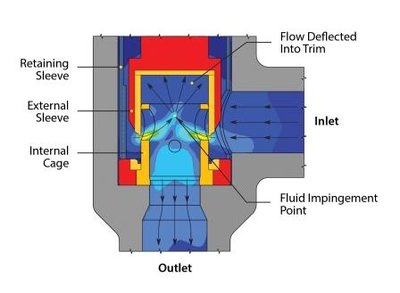
This unique design, resulting from our extensive R&D efforts, has become the industry benchmark, especially in high-pressure and severe service scenarios. The design’s key benefits include:
Master Flo Trims
At Master Flo, we understand that control and precision are paramount in flow management. Our standard trim design epitomizes this understanding, offering unparalleled control throughout its lifespan. This is achieved through a thoughtful design where smaller lower ports manage the initial 15% of the control range, ensuring fine-tuned management at lower flow rates. Meanwhile, larger ports cater to the valve’s overall capacity, allowing efficient handling of higher flow rates.
Equal Percentage Flow Characteristic Curve
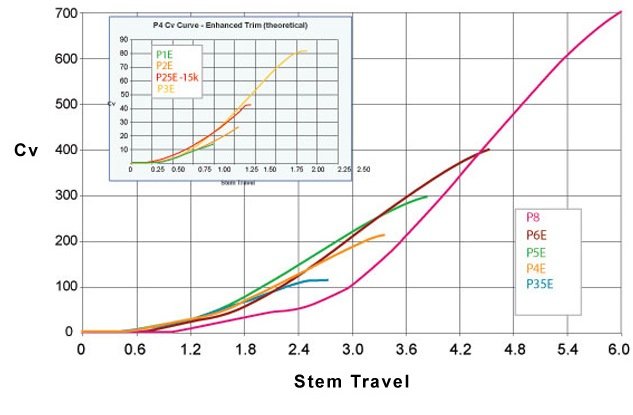
The equal percentage flow characteristic curve of Master Flo trims is a testament to our commitment to precise and consistent flow control. This design ensures a gradual response in the initial phase of stem travel, providing exceptional control right from the start. As the valve opens further and flow increases, this meticulous level of control is maintained, ensuring high turndown ratios, remarkable repeatability, and pinpoint accuracy in flow management. This feature is particularly beneficial in applications where precise flow modulation is critical.
High Liquid Pressure Recovery Factor (FL)
The concept of the liquid pressure recovery factor (FL) is crucial in understanding the efficiency of choke valves. FL measures the extent of pressure drop (vena contracta effect) as fluid travels through the valve. A lower FL value often leads to cavitation and subsequent erosion. Master Flo’s design excellence is evident in our trims’ high FL values across the entire control range. This elevated FL translates into significantly reduced cavitation risks, lower operational noise, and a marked increase in trim life, ensuring consistent performance and longevity.
Tailored Solutions for Diverse Needs
Recognizing that each project has unique requirements, Master Flo also offers a range of specialized trims, including Multi-stage, High-Pressure Multi-stage, LabFlo, and custom configurations. These options are designed to meet the specific flow requirements of different projects, further underlining our dedication to providing solutions that are as unique as the challenges our customers face.
Minimizing Erosion
Enhanced Shutoff and Control with Master Flo Trim
The Master Flo trim is meticulously engineered to offer superior control and reliable shutoff capabilities throughout its operational life. This exceptional performance is rooted in our innovative design that significantly minimizes erosion, particularly at the tapered seat faces.
Strategic Design for Erosion Minimization
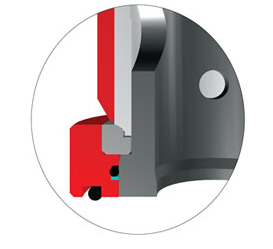
Understanding the challenges posed by high-velocity flow zones, our trim design strategically positions the tapered seat faces upstream of the throttling components. This careful placement is critical in ensuring that the seats remain outside of these erosive high-velocity zones. By doing so, the design effectively extends the life of these critical components, maintaining optimal performance over an extended period.
Innovative “Dead Band” for Enhanced Shutoff
A unique feature of our design is the incorporation of a “dead band” between the stationary seat and the nozzle ports. This feature plays a vital role in minimizing flow during the seating process, thus ensuring a more effective and reliable shutoff. The “dead band” not only enhances the shutoff efficiency but also contributes to the overall durability and longevity of the valve.
Class V and VI Shutoff Capabilities
In compliance with FCI 70-2 – 1998 standards, Master Flo trims are capable of achieving Class V shutoff, a testament to our commitment to quality and reliability. Furthermore, with appropriate actuation systems, our trims are capable of reaching the more stringent Class VI shutoff standards. This adaptability allows for a broader range of applications, ensuring that our valves meet and exceed the diverse needs of our clients.
Master Flo's Innovation in Valve Design
Ease of Service and Inspection
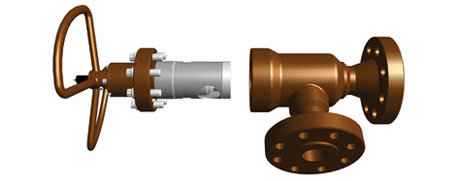
Master Flo valves stand out in the industry for their innovative approach to design, especially evident in our non-threaded trim feature. This design philosophy focuses on making service and inspection as efficient as possible. The stationary trim components are uniquely held in place by a mechanically-held retaining sleeve, rather than being threaded into the valve body. This innovative approach allows for the rapid and effortless removal of all internal components from the valve body, streamlining maintenance processes and eliminating the need for specialized tools. The simplicity of disassembling the valve, starting from the release of the bonnet to the removal of the retaining sleeve along with all internal components and the actuator, reflects our commitment to user-friendly design.
Precision Engineering and Extended Valve Life
A significant advantage of the non-threaded trim is the ability to design trim components with exceptionally tight tolerances. This level of precision not only enhances the valve’s performance but also contributes to its longevity by reducing wear over time. The meticulous attention to detail in the design of these components showcases Master Flo’s dedication to quality and reliability.
Optimized Flow Control and Reduced Erosion
Moreover, the use of a retaining sleeve plays a crucial role in controlling the process media flow within the valve. By directing the flow to the nozzle ports and isolating the valve-body bore, our design effectively manages the flow dynamics. This strategic flow control significantly reduces erosion within the valve, thereby extending its operational lifespan and ensuring consistent performance under various service conditions.
Master Flo's Commitment to Environmental Excellence
Combatting Fugitive Emissions in Severe Service Applications
Master Flo’s Fugitive Emission (FE) choke valves represent a significant stride in addressing environmental concerns in the oil and gas industry, particularly in severe service applications. These valves are expertly designed to minimize the leakage of volatile organic compounds (VOCs) into the atmosphere, thereby playing a crucial role in environmental protection.
Exceeding ISO 15848 Specifications for Safety and Compliance
Our FE choke valves not only meet but exceed the rigorous requirements of ISO 15848 specifications. This accomplishment underscores our commitment to ensuring increased personnel safety and reducing environmental impact. By adhering to these stringent standards, our valves also ensure compliance with various industry regulations, making them ideal for a wide range of applications.
Key Features of Master Flo’s FE Choke Valves
Reliability: Our FE choke valves are built upon the proven technology of Master Flo, featuring a robust and engineered sealing system. This design ensures longevity and consistent performance, with minimal maintenance requirements.
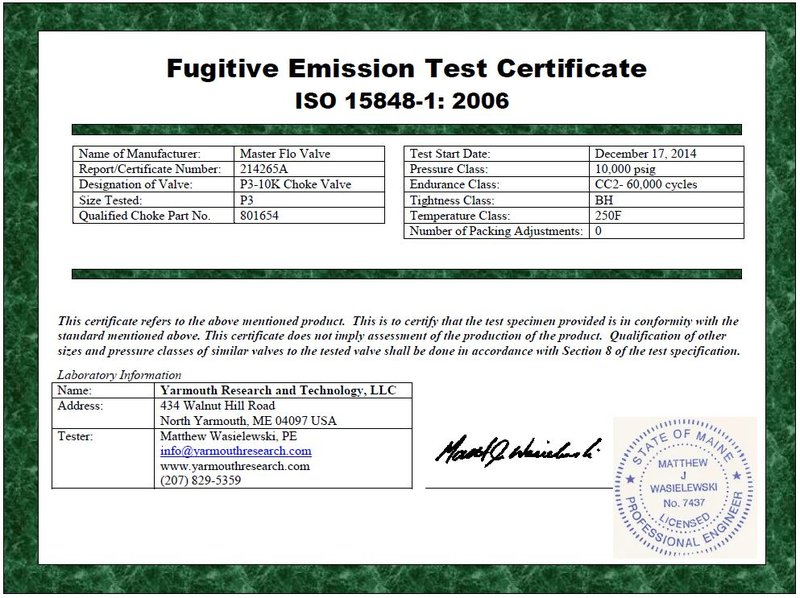
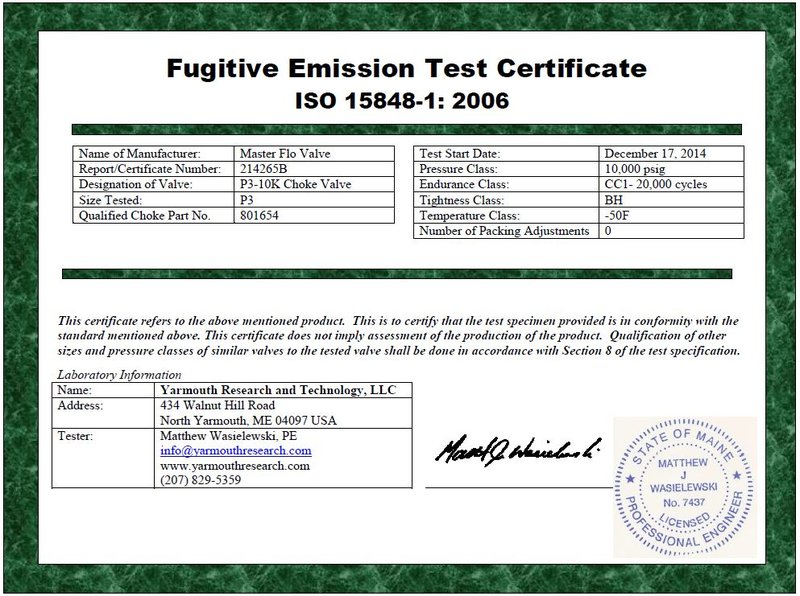
Durability: Demonstrating our commitment to quality, these valves have undergone rigorous testing, completing 60,000 mechanical cycles to achieve the CC2 endurance class. This level of testing guarantees that our valves are built to last, even under the most challenging conditions.
Maintenance-Free Design: The environmental seals in our FE choke valves are continuously energized, which eliminates the need for ongoing mechanical packing adjustments. This feature ensures a consistently high-performance level while reducing the need for frequent maintenance.
Streamlined Processes: Our optimized valve design negates the need for surface hardening or coating systems to maintain an effective seal, simplifying the overall maintenance process and enhancing the valve’s operational efficiency.
Independent Qualification: To ensure the highest standards of quality and reliability, the type testing of our FE choke valves was conducted at a renowned third-party facility. This independent verification serves as a testament to the exceptional performance and reliability of our products.
Materials engineered to resist erosion
Expertise in Materials Engineering for Optimal Performance
At Master Flo, our Materials Engineers bring a wealth of experience in tailoring trim and valve component materials to suit specific application needs. Recognizing the diverse challenges of severe service conditions, we offer a comprehensive range of material options, including our proprietary 5CB Tungsten Carbide. This material stands out for its exceptional erosion and corrosion resistance, as well as its increased toughness, making it ideal for the most demanding environments.
Superior Erosion Resistance with 5CB Tungsten Carbide
In our commitment to offering the best in durability, 5CB Tungsten Carbide has been rigorously tested and proven to provide outstanding erosion resistance. When evaluated in the Master Flo erosion loop, 5CB-equipped trims demonstrated up to 7.7 times the erosion resistance compared to other Tungsten Carbides. This remarkable performance ensures longer life and reliability of our valves under erosive conditions.
Enhanced Corrosion Resistance
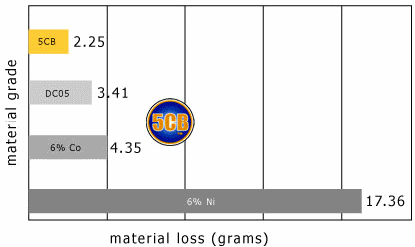
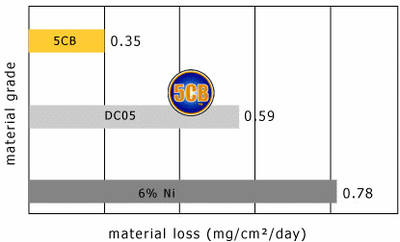
Corrosion resistance is another critical factor in valve performance, especially in harsh chemical environments. In third-party testing, where various grades of Tungsten Carbide were exposed to a corrosive solution of HCl acid saturated with H2S and CO2, 5CB Tungsten Carbide emerged as the superior material. It exhibited 2.2 times the corrosion resistance of Tungsten Carbide with a 6% nickel carbide binder, highlighting its robustness in aggressive environments.
Increased Toughness for Durability
Toughness is a crucial attribute of materials used in valve components, directly impacting their ability to resist fracture and impact-related failures. 5CB Tungsten Carbide’s toughness was assessed using the industry-standard Palmqvist test at a third-party facility. The results unequivocally showed that 5CB offers a significant toughness advantage over all other tested carbide grades, further cementing its position as a material of choice for high-performance valve components.
This website uses cookies that recognize your computer or device to give you the best user experience and to improve its features. You can disable cookies through your browser but some features of the site will no longer be available. Read our Website Privacy Statement.